Sports sponsorship under actual profit: how to deduct it from IRPJ
Companies under Brazil’s actual profit regime can deduct sports sponsorship from IRPJ: 2% to 2027, 3% from 2028, 4% for social inclusion. Rules and math.
A company taxed under lucro real (actual profit regime) can deduct sports sponsorship directly from the IRPJ (corporate income tax) due: up to 2% in 2026 and 2027, up to 3% from 2028 and up to 4% when the project is a social inclusion one. The basis is Lei Complementar nº 222/2025, a Lei Complementar (complementary law), arts. 9 and 23. This is how companies in Brazil do it; readers abroad do not pay tax in Brazil, but the rules show how a Brazilian company can back a sports project. This article explains who can do it, how much, how to calculate it and what to do before signing the sponsorship agreement.
Who can use it
Only companies taxed on the basis of actual profit (art. 9, § 1, I). This applies whether they report quarterly or annually, by estimate. Simples Nacional (the simplified regime for small businesses) and lucro presumido (presumed profit regime) cannot deduct. We explain the alternatives for these companies in Simples and presumed profit: is there an incentive?.
Sponsorship or donation
Art. 4 of the law defines:
- Sponsorship: a transfer of funds with a promotional or advertising purpose. The company’s brand appears on uniforms, materials and at the event.
- Donation: a transfer without publicity.
The tax limit is the same in both cases. The choice affects what the company can ask for in return and how marketing will use the support.
How much the company can deduct
| Calendar year | General limit | Social inclusion projects |
|---|---|---|
| 2026 and 2027 | 2% of IRPJ due (art. 23) | 4% (art. 9, § 4) |
| 2028 onward | 3% of IRPJ due (art. 9, § 1, I) | 4% |
Three details that cost a lot when ignored:
- The base is IRPJ due. Under the old law, the 10% IRPJ surcharge was outside the base; ask your accountant to check how the Receita Federal (federal tax authority) treats the surcharge under the new rule.
- The 4% is shared with the Lei Rouanet (the federal culture incentive law, art. 26 of Law nº 8,313/1991) and with the Lei do Audiovisual (the federal audiovisual incentive law). If the company already uses these incentives, they take up part of the same cap.
- The amount is not an expense. Art. 9, § 2, prohibits booking the sponsorship as an operating expense to reduce actual profit or the CSLL (social contribution on net profit) base.
The 90% reduction in LC 224/2025
One month after LC 222, LC 224/2025 imposed a general cut on federal tax benefits. Art. 4, § 4, item V, requires that only 90% of reductions in tax due be applied. Decree nº 12,861/2026, art. 2, § 10, says the sports incentive for companies must observe this reduction.
In the most common reading, the 2% becomes 1.8% and the 4% becomes 3.6%. The exact way to apply the rule in the tax calculation still raises questions: ask your accountant to check the latest guidance from the Receita Federal. The topic has its own article: LC 224/2025 and the cut in incentives.
Example with round numbers
A company under actual profit with IRPJ due of R$ 500,000 for the year:
- general limit in 2026: 2% = R$ 10,000;
- with the 90% reduction: R$ 9,000;
- if the project is a social inclusion one: 4% = R$ 20,000; with the reduction, R$ 18,000.
This amount comes out of tax the company would pay anyway. The real cost of the sponsorship, within the limit, is zero; what changes is where the money goes.
Step by step for the company
- Estimate the year’s IRPJ due with your accountant. Without that estimate, you cannot know the limit.
- Choose an approved project that is fundraising. Only projects with approval published in an official act qualify (art. 10). Ask for the case number and the deadline.
- Check for related parties. Art. 5 prohibits supporting a project of the company itself, partners, spouses, relatives up to the third degree and affiliated companies.
- Sign the sponsorship agreement setting out the brand counterparts.
- Transfer to the project’s dedicated account, at Banco do Brasil or Caixa, both federal public banks (art. 11). The organization’s general account does not count.
- Keep the receipt issued by the proponent.
- Deduct it in the IRPJ calculation, quarterly or annual, within the limit.
Common mistakes
- Booking it as a marketing expense and deducting it from IRPJ at the same time. The law prohibits the double benefit.
- Calculating on the wrong base. Confirm with your accountant whether the 10% surcharge is included in the calculation.
- Ignoring LC 224/2025 and deducting the full 2%.
- Sponsoring after the fundraising period ends. The deduction is lost.
- Asking the proponent to raise more than the approved amount. Art. 10 prohibits it.
- Confusing it with PIE/SC. The federal law uses IRPJ. The Santa Catarina program uses ICMS (state tax on goods and services) and has its own rules.
What about Muaythai in Balneário Camboriú?
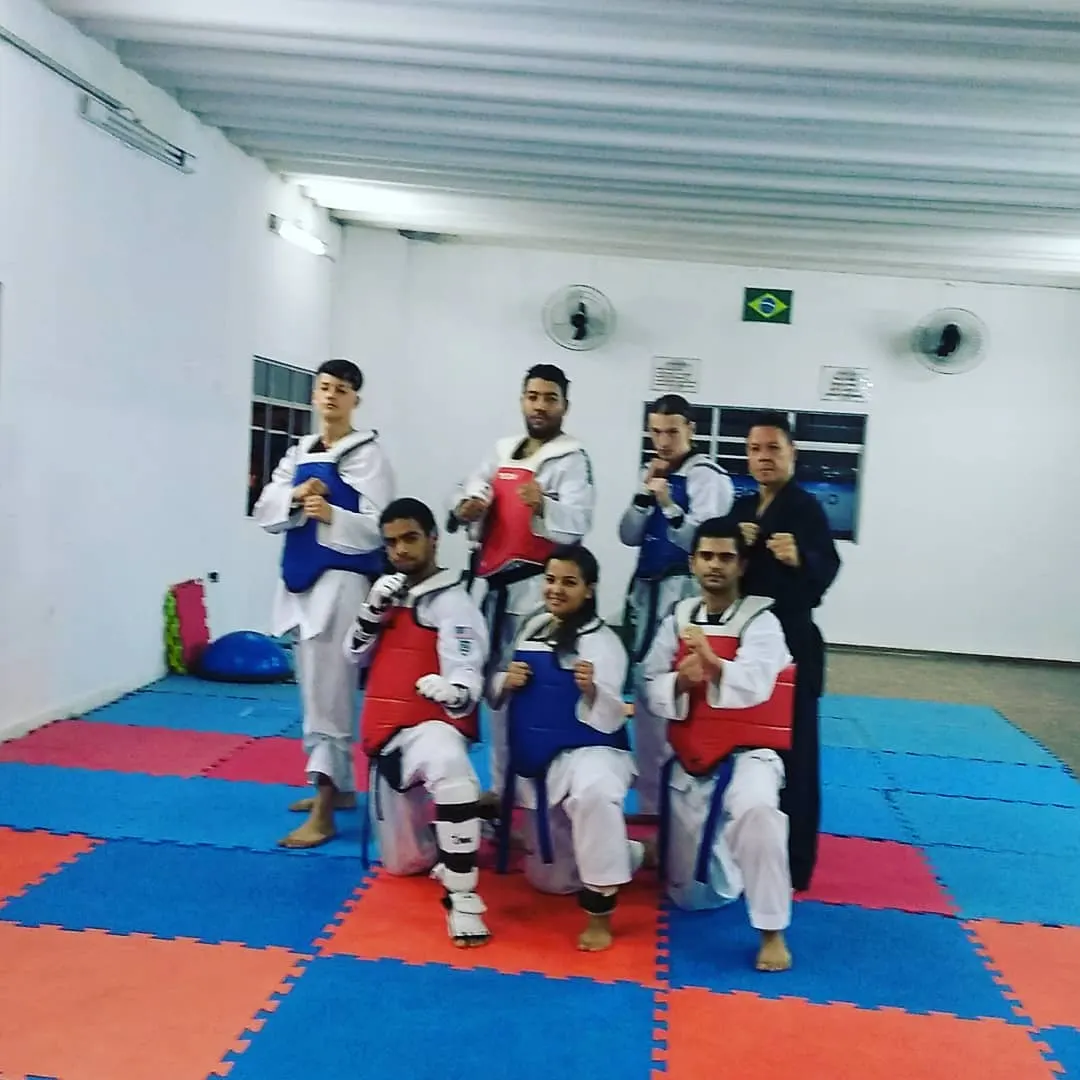
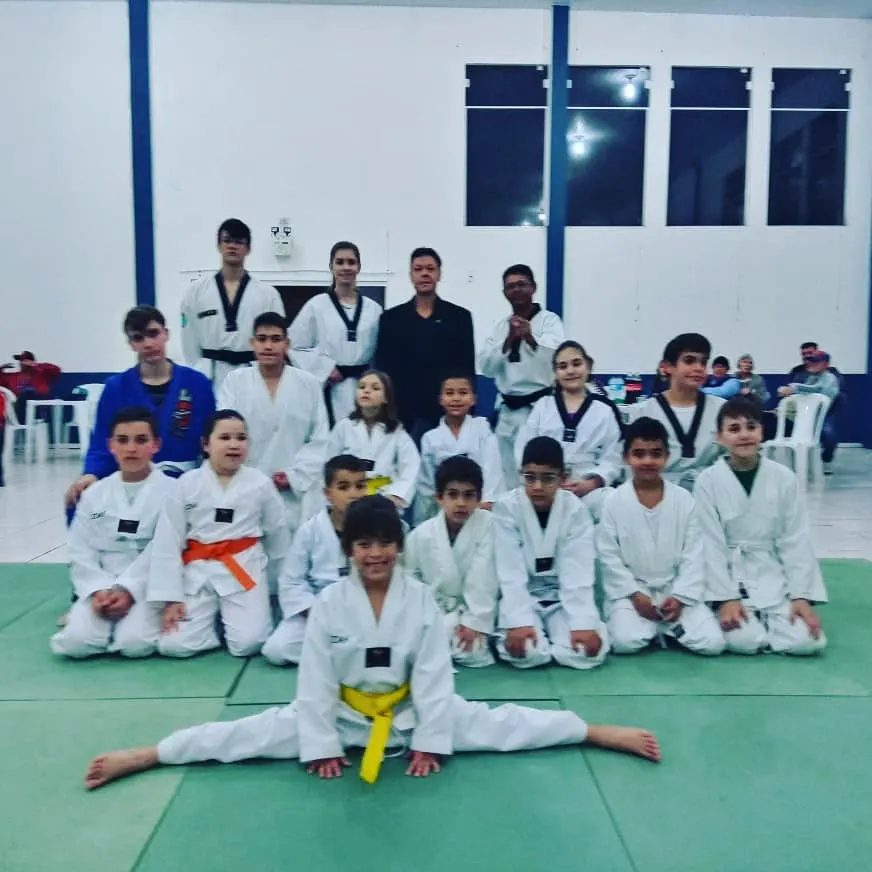
Straight notice: there is no project by Mestre Paulo Ribeiro or by FECAMTT, the Santa Catarina Traditional Muaythai Federation, approved to receive IRPJ under the Sports Incentive Law. Projeto Campeões do Futuro (“Future Champions”), which has taught free Taekwondo to children after school hours for more than twenty years, is not on the federal list.
What does exist is FECAMTT’s Muaythai nas Escolas (“Muaythai in Schools”) project, approved under PIE/SC (Santa Catarina’s Sports Incentive Program). It receives support from companies that pay ICMS in Santa Catarina, with a crédito presumido (presumed tax credit) of 15%, 10% or 7% of the tax, depending on the revenue bracket. If your company is under actual profit and pays Santa Catarina ICMS, you can use both paths: IRPJ for an approved federal project and ICMS for Muaythai nas Escolas. See the Muaythai nas Escolas page.
How to do it today
- Ask your accountant for the estimated IRPJ due and calculate 2%.
- Ask them how the company will apply the LC 224/2025 reduction.
- If the company pays ICMS in Santa Catarina, also ask about PIE/SC.
- Before signing any agreement, require the published approval and the dedicated account details.
This is how companies in Brazil do it. If you live abroad, you do not pay tax in Brazil, but you can still support the project. Want to talk about supporting Muaythai in Balneário Camboriú? Talk to the Mestre.
This content is for information only and does not replace advice from your accountant. Rules may change: always check the wording currently in force.
Frequently asked questions
Which companies can deduct sports sponsorship from IRPJ?
Only companies taxed under lucro real (actual profit regime). Simples Nacional (the simplified regime for small businesses) and lucro presumido (presumed profit regime) are left out (LC 222/2025, art. 9, § 1, I).
What is the company’s limit?
Up to 2% of IRPJ (corporate income tax) due through calendar year 2027 and up to 3% from 2028. For social inclusion projects, up to 4%. LC 224/2025 requires that only 90% of these reductions be applied: check with your accountant.
Can the sponsorship be booked as an expense?
No. Art. 9, § 2, of LC 222/2025 prohibits deducting the amount as an operating expense from actual profit and from the CSLL (social contribution on net profit) base.
What is the difference between sponsorship and donation?
Sponsorship has a promotional purpose: the brand appears. A donation has no publicity (art. 4 of LC 222/2025). The tax limit is the same.
Can a company sponsor a project run by its own owner?
No. Art. 5 prohibits supporting a project of the company itself, a spouse, relatives up to the third degree and affiliated companies.
Sources
Want to support the project?
See how companies and people in Brazil support sport through their taxes, or talk directly to the Master.
Read next
State public utility status: what the title gives a federation
FECAMTT received state public utility status under Law 19,281/2025. What it means, what it does not mean and how a federation applies.
· 8 min read
After-school sports in Brazil: what the law supports and how it works
After-school sports in Brazil: how the Sports Incentive Law, PIE/SC and Fundesporte treat projects for children, with a Balneário Camboriú example.
· 5 min read
How to get corporate sponsorship for a sports project in Brazil
How to get company sponsorship for a sports project in Brazil: PIE/SC, the Sports Incentive Law or direct sponsorship, what to bring, what not to promise.
· 5 min read