The 7% limit for individuals: how to calculate the deduction
In Brazil, the sports incentive limit for individuals is 7% of tax due, shared with other funds. See how to calculate it, with examples.
The deduction limit of the sports incentive for individuals is 7% of imposto devido (tax due), and that percentage is shared with other incentivized donations, such as the children’s and elderly funds and the Lei Rouanet (the federal culture incentive law). In other words: someone with R$ 10,000 of tax due can allocate up to R$ 700 in total, not R$ 700 for each law. The rule is in art. 9, § 1, item II, of Lei Complementar nº 222/2025, a Lei Complementar (complementary law). This is how taxpayers in Brazil do it; readers abroad do not pay tax in Brazil, but the math shows how much a Brazilian supporter can direct to sports. This article shows how to calculate it without mistakes.
What tax due means
Many people confuse tax due with tax payable. They are different things:
- Tax due is the tax calculated on your taxable income for the year, after subtracting dependents, health, education and pension contributions. It is the base for the limit.
- Tax payable or tax refund is the difference between the tax due and what was already withheld at source.
You can have a refund coming and still have a high tax due. In that case the donation simply increases your refund. What matters is the “tax due” line on your return.
The 7% rule and the 6% rule
LC 222/2025 says the 7% applies “jointly” with the deductions in art. 12, items I to III, of Law nº 9,250/1995, which are the children and adolescents funds, the Lei Rouanet and audiovisual projects. The elderly funds come in through Law nº 12,213/2010.
The Receita Federal (federal tax authority) detailed the sum in IN RFB nº 2,299/2025, which amended art. 80 of IN nº 1,500/2014:
- the sum of children’s funds, elderly funds, Rouanet, audiovisual and sports cannot exceed 7% (§ 1-A);
- the sum of children’s funds, elderly funds, Rouanet and audiovisual, without sports, cannot exceed 6% (§ 1-B).
That 6% comes from art. 22 of Law nº 9,532/1997, which already limited deductions before the sports incentive existed. The ECA (Brazil’s Child and Adolescent Statute), in art. 260, item II, repeats the 6% limit for individuals donating to children’s funds.
How to calculate it, in 4 steps
- Take the tax due from your last return. Let’s use R$ 10,000.
- Calculate 7%: R$ 700. That is the total cap for incentivized donations.
- Calculate 6%: R$ 600. That is the cap for children’s funds, elderly funds, Rouanet and audiovisual combined.
- Split it. If you donate R$ 600 to the FIA (Fundo da Infância e Adolescência, the Children and Adolescents Fund), R$ 100 is left for sports. If you do not donate to any fund, you can put the whole R$ 700 into sports.
Examples with round numbers:
| Tax due | Total cap (7%) | Cap without sports (6%) |
|---|---|---|
| R$ 5,000 | R$ 350 | R$ 300 |
| R$ 10,000 | R$ 700 | R$ 600 |
| R$ 20,000 | R$ 1,400 | R$ 1,200 |
| R$ 50,000 | R$ 3,500 | R$ 3,000 |
PRONON and PRONAS: another 2% on the side
Law nº 12,715/2012, art. 4, § 6, created two separate limits: 1% for PRONON, the cancer care support program, and 1% for PRONAS, the health support program for people with disabilities. That 2% does not count toward the 7%. Adding everything up, an individual can reach 9% of tax due. We explain it in PRONON and PRONAS: how to deduct.
What does not count toward the limit
- Donations to churches, NGOs and campaigns that have no project approved under an incentive law. They generate no deduction at all.
- Donations to individuals, including athletes.
- Donations of goods or services. For sports, the safe path is money into the dedicated account.
- Donations to organizations related to you: spouse, relatives up to the third degree, affiliated company (LC 222/2025, art. 5).
Common mistakes
- Calculating 7% on tax payable. The base is tax due.
- Adding 7% + 6%. The 6% sits inside the 7%, not next to it.
- Thinking the 4% for social inclusion applies to individuals. Art. 9, § 4, of LC 222 deals with companies.
- Donating under the simplified return. The desconto simplificado (simplified standard deduction) of 20% replaces all deductions. See full or simplified return for donating.
- Forgetting a donation made on the return itself to the children’s fund, which also uses up the limit.
Where this limit meets Balneário Camboriú
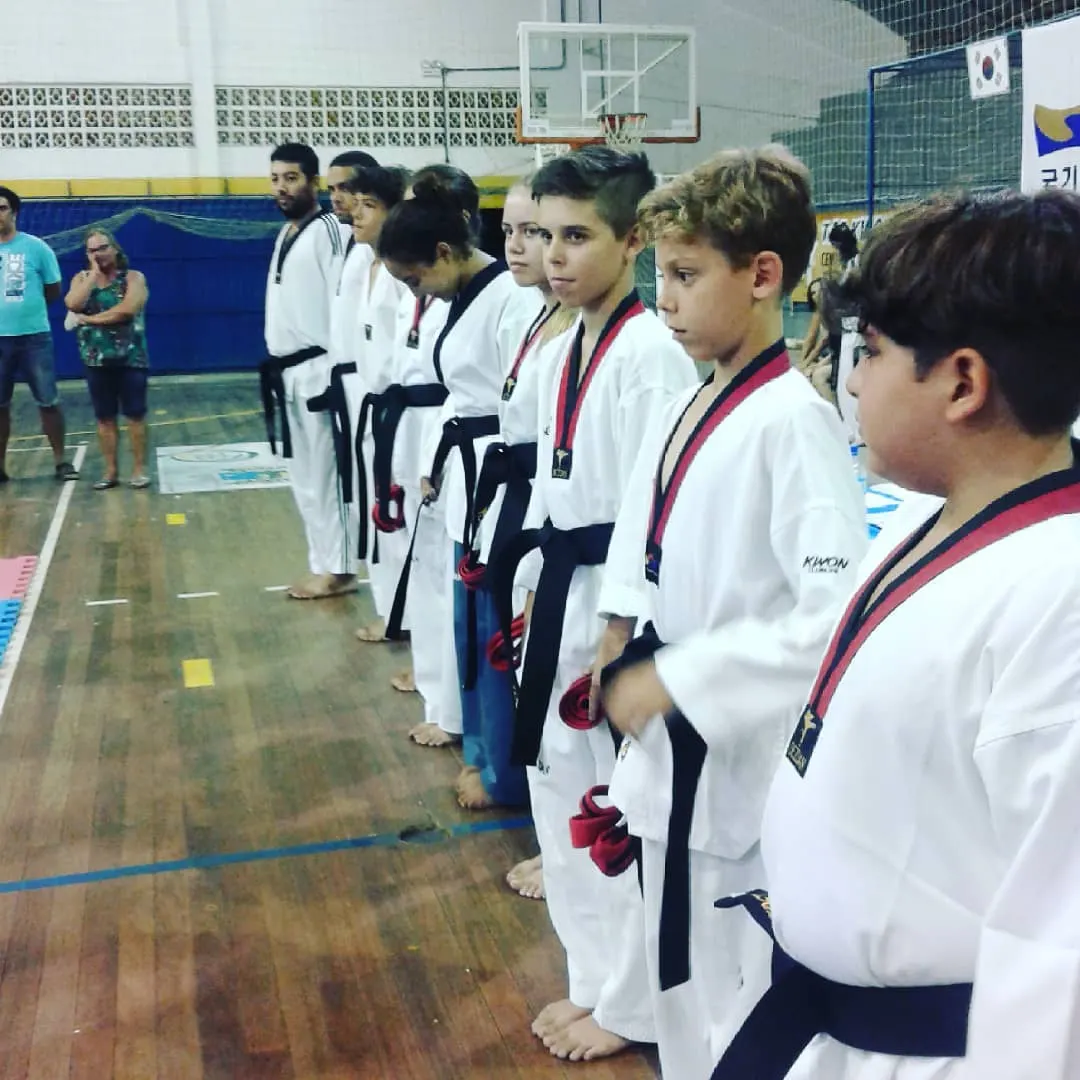
Here is the usual notice: Projeto Campeões do Futuro (“Future Champions”), Mestre Paulo Ribeiro’s free project that teaches Taekwondo to children after school hours, and FECAMTT, the Santa Catarina Traditional Muaythai Federation, have no project approved to receive Imposto de Renda (income tax). FECAMTT runs Muaythai nas Escolas (“Muaythai in Schools”) under PIE/SC (Santa Catarina’s Sports Incentive Program), which receives ICMS (state tax on goods and services) from companies. See Muaythai nas Escolas.
If you are an individual taxpayer in Balneário Camboriú, your 7% limit can go to the city’s Children and Adolescents Fund, which funds projects for children and teenagers approved by the municipal council, or to projects already approved under the Sports Incentive Law. Both paths are on the Support page.
How to do it today
- Open your last return and write down the tax due.
- Multiply it by 0.07 and by 0.06. Write down both numbers.
- List what you already donate to incentivized funds.
- Whatever is left up to 7% is the room for sports.
- If the result is small, do not be discouraged: R$ 100 well directed is still R$ 100 that would otherwise not be invested in sports.
This is how taxpayers in Brazil do it. If you live abroad, you do not pay tax in Brazil, but you can still support the project. Want to understand which path makes the most sense? Talk to the Mestre.
This content is for information only and does not replace advice from your accountant. Rules may change: always check the wording currently in force.
Frequently asked questions
Is the 7% limit only for sports?
No. The 7% is shared with the children and adolescents funds, the elderly funds, the Lei Rouanet (the federal culture incentive law) and audiovisual projects (LC 222/2025, art. 9, § 1, II, and IN RFB nº 2,299/2025).
What is imposto devido (tax due)?
It is the tax calculated on the year’s taxable income, after deductions for dependents, health and education, but before subtracting the tax withheld at source.
Is there a limit within the limit?
Yes. IN RFB nº 2,299/2025 says the sum of children’s funds, elderly funds, Rouanet and audiovisual cannot exceed 6%. With sports, the total reaches 7%.
Do PRONON and PRONAS count toward the 7%?
No. They have their own limits of 1% each, outside the 7%, under Law nº 12,715/2012, art. 4, § 6. Adding everything up, an individual can reach 9%.
If I donate more than the limit, do I lose the money?
The amount above the limit is not deducted from your tax. It becomes an ordinary donation to the project, with no tax benefit.
Sources
Want to support the project?
See how companies and people in Brazil support sport through their taxes, or talk directly to the Master.
Read next

State public utility status: what the title gives a federation
FECAMTT received state public utility status under Law 19,281/2025. What it means, what it does not mean and how a federation applies.
· 8 min read

After-school sports in Brazil: what the law supports and how it works
After-school sports in Brazil: how the Sports Incentive Law, PIE/SC and Fundesporte treat projects for children, with a Balneário Camboriú example.
· 5 min read

How to get corporate sponsorship for a sports project in Brazil
How to get company sponsorship for a sports project in Brazil: PIE/SC, the Sports Incentive Law or direct sponsorship, what to bring, what not to promise.
· 5 min read