Kukkiwon: what it is and why it matters for your black belt
What is Kukkiwon: Taekwondo’s world headquarters in Seoul, founded in 1972, and the difference between a school black belt and a Dan registered there.
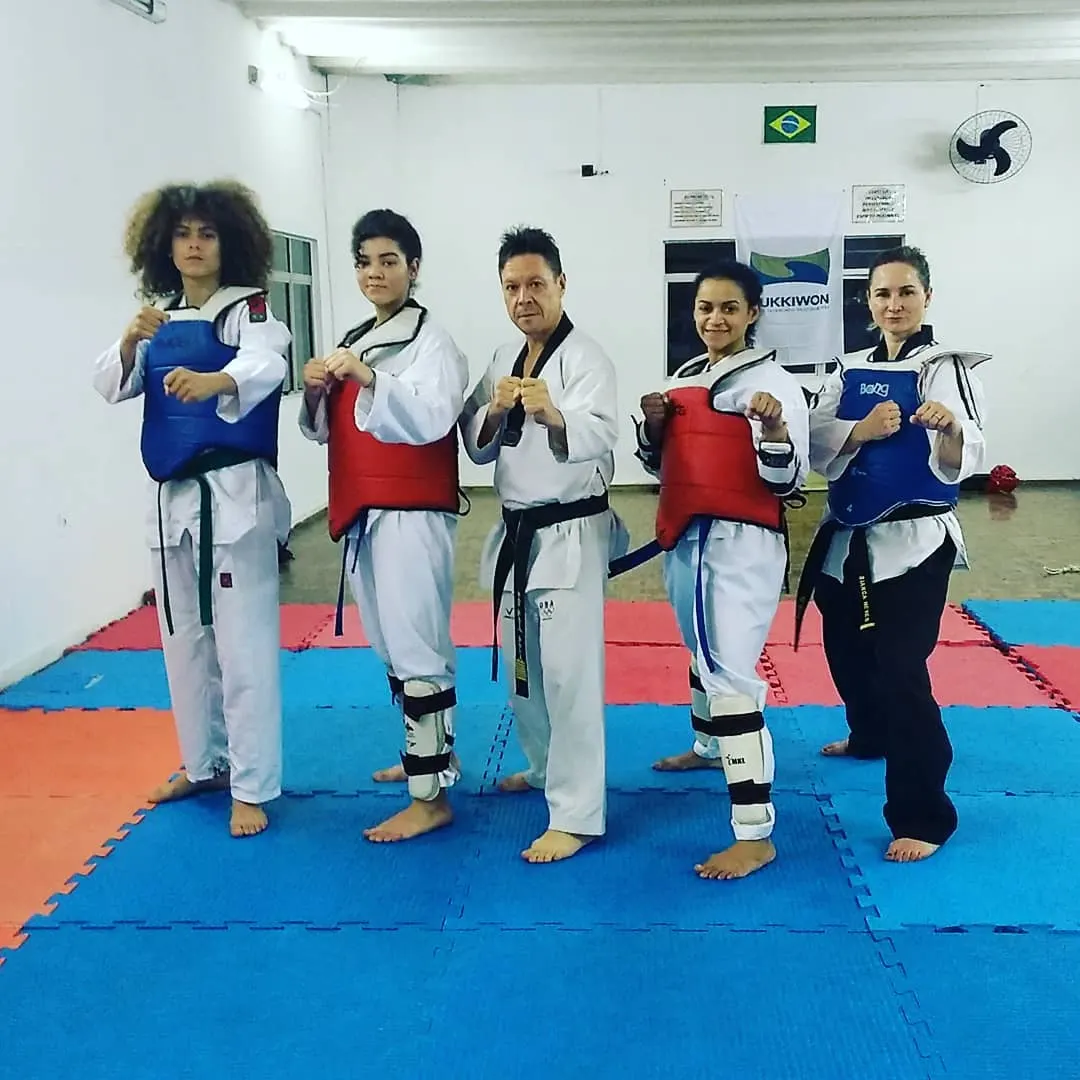
Kukkiwon is Taekwondo’s world headquarters: an institution based in Seoul, founded on November 30, 1972, that acts as the sport’s highest technical authority and issues the international black belt certificates, called Dan (for adults) and Poom (for minors). When someone says they “have a Kukkiwon Dan”, they mean their rank was registered there and is valid in any country. This article explains, without jargon, what Kukkiwon is, what separates a “school” black belt from a registered Dan, and why this is part of Mestre Paulo Ribeiro’s story.
What Kukkiwon is
According to its official page, Kukkiwon was founded on November 30, 1972 to preserve, develop and promote the spirit and techniques of Taekwondo, and it presents itself as the World Taekwondo Headquarters. It is located in the Gangnam district of Seoul.
English Wikipedia adds that the institution is Taekwondo’s highest technical authority, houses the World Taekwondo Academy, responsible for instructor training, and operates under the supervision of South Korea’s Ministry of Culture, Sports and Tourism. The central gym and the organization were officially named Kukkiwon on February 6, 1973, and in May of that year the venue hosted the first World Taekwondo Championships, with 200 athletes from 17 countries.
In short: Kukkiwon handles technique, instructor training and ranks. World Taekwondo, with which it works closely, handles competitions and Olympic Taekwondo, which, according to the Brazilian Olympic Committee, was a demonstration sport at Seoul 1988 and became an official sport at Sydney 2000.
School black belt vs. registered Dan: the difference
Any Taekwondo school can award a black belt to a student who passes the exam. The difference lies in the registration.
- School or federation black belt. The student took the exam, received the belt and, usually, a certificate from the school or the state federation. It is valid within that system.
- Dan registered with Kukkiwon. On top of the local exam, the rank was sent to Kukkiwon, which issues a certificate with a registration number in the holder’s name. This number is what lets you prove your rank in any country, transfer to another school or federation and test for higher Dan ranks.
- Poom. The equivalent of Dan for minors, registered in the same way and converted to Dan when the student reaches the age set in the regulations.
The section on ranks in English Wikipedia summarizes the hierarchy of the Kukkiwon system: from 1st to 3rd Dan, the black belt is considered an assistant instructor and cannot yet award ranks; from 4th Dan up to the 6th, they are a master instructor and can grade students below their own rank; from 7th to 9th Dan, they are a grandmaster. Kukkiwon ranks also have age requirements, and grandmaster ranks require being over 40. The minimum waiting times between one Dan and the next are set out in Kukkiwon’s exam regulations and are not repeated here to avoid outdated figures.
How to check your certificate
The website of the World Taekwondo Academy, a branch of Kukkiwon, has a lookup page to retrieve or renew Poom, Dan and certificate information. During this research, the page could not be fully opened; so the safest route is:
- find the physical certificate and write down the registration number;
- ask your instructor to confirm which body registered the rank (Kukkiwon, state federation, national confederation or only the school);
- if the rank is old and from another state, show the certificate to your new instructor before any exam, so they can advise on recognition.
The Brazilian Olympic Committee sums up what the belt stands for: “dignity, dedication, posture and leadership”. Registration does not replace that, but it protects years of effort against a lost piece of paper or a move to a new city.
Kukkiwon in Mestre Paulo’s lineage
The history of Kukkiwon crosses paths with that of Mestre Paulo’s own master. According to the text by Grão-Mestre (Grandmaster) Alexandre Gomes published by IBAM, Grão-Mestre Te Bo Lee was there during the institution’s formative years and took part, in 1972, in Kukkiwon’s 1st instructor course, before coming to Brazil in 1977. In July 2024, according to a post by Associação Tchon Ji, he returned to the headquarters in Seoul, was honored by president Lee Dong Sup and received the new model of 9th Dan certificate. His full biography is in the article about Grão-Mestre Te Bo Lee.
At the Santa Catarina end of this chain, Mestre Paulo guides his students through the state federation’s official exams. On December 16, 2017, at the black belt exam of FETESC (the Santa Catarina State Taekwondo Federation) in Balneário Piçarras, he posted a photo of the candidates in front of the Kukkiwon banner and recalled that “one of the black belt oaths is to respect my master’s teachings” (Instagram). The account of that day is in the article about the December 2017 black belt exam. The Kukkiwon flag also hangs on the wall of the training center, as the photo illustrating this article shows.
The full chain, from the Kukkiwon of 1972 to the students in Balneário Camboriú, is in the article about Mestre Paulo Ribeiro’s lineage.
What has not yet been confirmed
To keep to this site’s standard:
- it has not been confirmed, by any public document, whether Mestre Paulo’s ranks are registered with Kukkiwon, nor the certificate number;
- the Poom and Dan lookup page was found, but could not be fully opened during this research; how it works, as described above, comes from the page’s own introductory text;
- the minimum waiting times between Dans and the exact ages for each rank are in Kukkiwon’s regulations, which were not opened here.
None of this is denied; it is simply not proven by an open document. If the Mestre makes his certificates available, this article will be updated.
Want to know if your old rank still counts?
If you trained Taekwondo in another city and kept your certificate, you do not have to start from scratch. Read Mestre Paulo’s story, bring your certificate and contact him on Instagram @mestrepauloribeiro to find out how to get back to training in Balneário Camboriú.
Frequently asked questions
What is Kukkiwon?
It is Taekwondo’s world headquarters, in Seoul, founded on November 30, 1972. It acts as the sport’s highest technical authority and issues the international Dan and Poom (black belt) certificates.
What is the difference between a school black belt and a Kukkiwon Dan?
A school black belt is valid within that school or federation. A Dan registered with Kukkiwon has a certificate number and is recognized in any country, which lets you transfer your rank when you move to another city or change instructors.
How do I know if my certificate is from Kukkiwon?
The certificate shows a registration number and the holder’s name. The Kukkiwon website offers a Poom and Dan lookup by name and date of birth. If in doubt, ask your instructor for your certificate number.
How is Kukkiwon related to World Taekwondo?
They are different institutions that work together: Kukkiwon handles technique, instructor training and ranks; World Taekwondo organizes international competitions and Olympic Taekwondo.
Sources
- Kukkiwon Introduction – Kukkiwon
- Kukkiwon – English Wikipedia
- Poom, Dan and certificate lookup – World Taekwondo Academy / Kukkiwon
- Taekwondo – English Wikipedia (section on ranks)
- Taekwondo – Brazilian Olympic Committee
- Taekwondo no RS, text by Grão-Mestre Alexandre Gomes – IBAM
- Grão-Mestre Te Bo Lee honored at Kukkiwon – Associação Tchon Ji, Instagram, August 29, 2024
- Black belt oath at the FETESC exam – Mestre Paulo Ribeiro, Instagram, December 16, 2017
Want to support the project?
See how companies and people in Brazil support sport through their taxes, or talk directly to the Master.
Read next
What is Hapkido? The Korean art of self-defense
What is Hapkido: the Korean self-defense art Grão-Mestre Te Bo Lee teaches alongside Taekwondo. Origins, techniques and differences, no hype.
· 5 min read

How traditional Taekwondo reached southern Brazil
From Porto Alegre in 1974 to Balneário Camboriú: how traditional Taekwondo reached southern Brazil, with Korean masters and the 1987 state federation.
· 6 min read
Mestre Paulo Ribeiro’s lineage: from Kukkiwon to Balneário Camboriú
Who taught Mestre Paulo Ribeiro Taekwondo? The lineage runs through Grão-Mestre Te Bo Lee, the Kukkiwon and southern Brazil to Balneário Camboriú.
· 5 min read